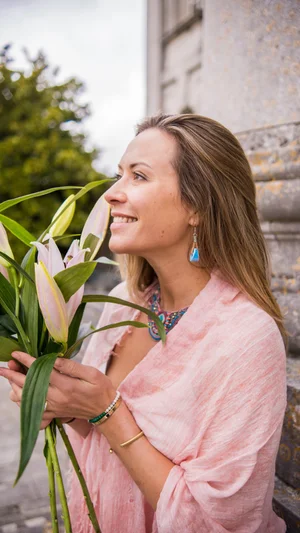
Dawn at the Temple of the Sacred Tooth.
Sri Lank Diaries. Part 4. Devotion, Chaos, and the Inner Shrine.
The visit to the temple began long before I stepped through its gates.
The night before, I arranged for a driver to collect me at 5 a.m., knowing that the morning ceremony would begin at 5:30 and wanting to arrive early enough to feel its unfolding rather than rush into it. I woke just before my alarm at 4:30, not abruptly but with a quiet alertness, as if something in me had already committed to the experience.
When I stepped out of the bungalow twenty-five minutes later, the mountain was still wrapped in darkness. No staff were on duty, no doors were opening, no human movement disturbed the quiet. The air was cool and still. Before getting into the waiting tuk-tuk, I instinctively looked up.
Because I was staying high in the mountains, the absence of city light allowed the night sky to reveal itself in full clarity. The blackness was deep and velvety, and the stars shone with a sharp brightness that stopped me mid-step. I stood there for a moment longer than necessary, letting that image imprint itself on me, aware that the day had already offered its first gift.
The descent toward the Temple of the Sacred Tooth Relic was silent, the tuk-tuk winding down the mountain roads while Kandy remained mostly asleep. We arrived ten minutes before the ceremony. The entry process was structured and orderly: first security, women and men separated; then an open square beyond the gates. Locals directed to the left, foreigners to the right. Visitors purchased a ticket — 2,000 rupees, framed as a donation — and left their shoes behind before entering barefoot.
From there, individuality dissolves.
You become part of a current.
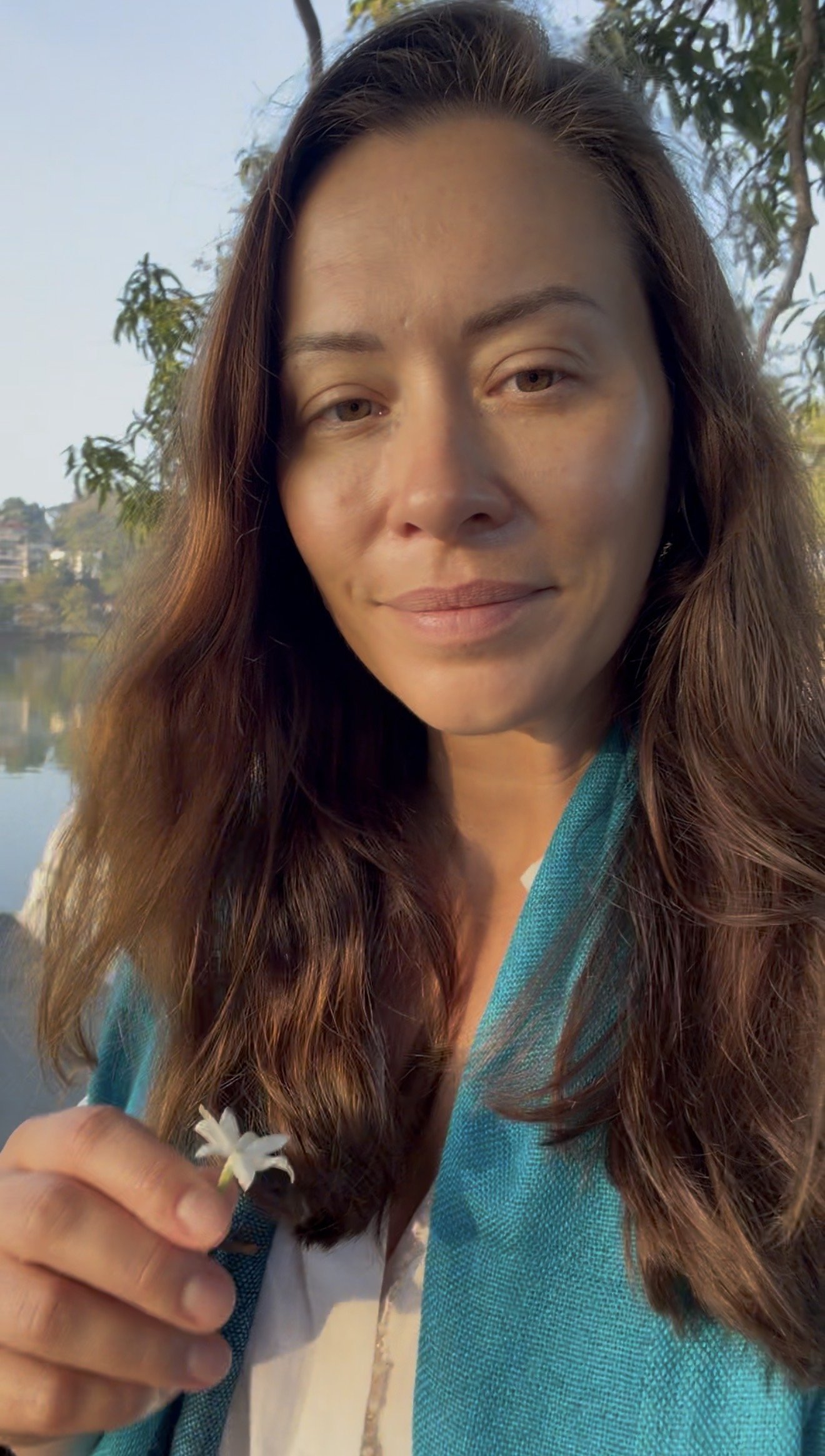
Most people were dressed in white.
Families carried trays of milk rice with raisins, jasmine, lilies, and other fragrant flowers; some held envelopes of money, others carefully arranged offerings wrapped in paper. The scent of flowers was immediate and strong, and beneath it, the warmth of bodies gathering in devotion.
Without consciously planning it, I had chosen to wear white that morning — a long white shirt and black trousers. It was a moon day, and I wore my moonstone and a pale blue scarf, thinking of the lunar quality of reflection and of Vishuddha, the throat chakra associated with expression and truth. I had not brought offerings; I came simply to observe. Yet observation quickly shifted into participation as the ceremony carried me forward.
The first hall was already crowded. Offerings were placed on long tables; some were taken deeper inside. Birds swooped down to peck at scattered rice, a strangely tender detail within the ritual’s intensity. The crowd moved in waves — sometimes pushing, sometimes pausing — and for a moment I felt the familiar edge of irritation rising.
Then I remembered: I chose to be here.
It was still early; the day had barely begun. I softened my stance and allowed myself to be moved rather than resist the flow.
Throughout the ceremony, the drums were constant — rhythmic, insistent, almost heartbeat-like — accompanied by what sounded like a wind instrument weaving through the percussive sound. The movement of the crowd, the drumming, the repeated gestures of offering and bowing created an atmosphere that felt, at first, chaotic. Yet it was not random; it was ritual in motion, devotion expressed physically and collectively.
Eventually, the crowd carried me upstairs, where the atmosphere subtly changed. There were ancient Buddhist texts preserved on palm leaves, including manuscripts dating back centuries — thousands of pages of teachings from the 1600s. The continuity of that lineage, the preservation of knowledge across generations, felt weighty and grounding. I placed another small donation there, not from obligation but from respect.
And then I entered the shrine room.
The current shrine structure is relatively new, rebuilt after past destruction, yet the space itself holds a palpable stillness. The drums continued outside, but inside their volume seemed distant, softened by the walls and by the collective reverence of those present.
A large Buddha statue anchored the room. Offerings were arranged carefully in front of it. Illustrated panels told the story of how the sacred relic journeyed to Kandy and became protected here, woven into the political and spiritual history of the region. I walked clockwise around the room, reading the narrative in sequence, returning finally to face the statue once more.
Then I sat.
For the first time that morning, the movement ceased.
The crowd thinned slightly, the pushing subsided, and a pocket of stillness opened. I closed my eyes and allowed myself to settle into breath, aware of the faint scent of frangipani and jasmine intensifying around me. When I opened my eyes, a group guided by monks stood before the statue with trays of flowers, their collective presence drawing me gently back into the immediacy of the moment.
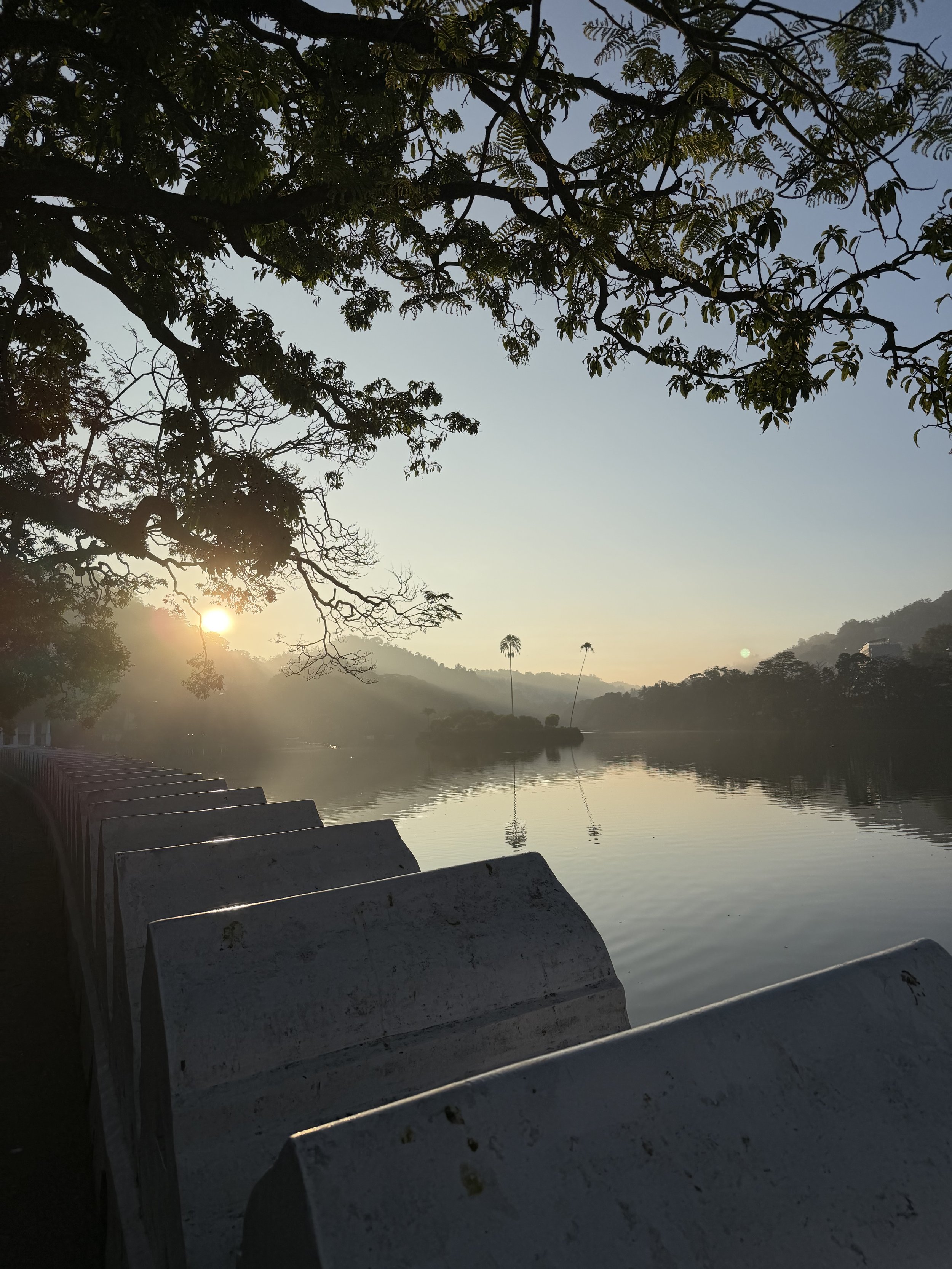
Kandy Lake, Sri Lanka 2026.
After some time, I rose and walked slowly through the temple grounds. The ceremony had ended. The drums had quieted. The air felt spacious again. By the time I exited the temple and began walking around the lake, the sun was rising — soft gold light touching the hills and spreading across the water’s surface. Pelicans glided calmly, other birds moved between trees, and to my delight I noticed a mother turtle with tiny hatchlings swimming beside her.
The contrast was striking: from intensity to stillness, from crowd to quiet lake, from ritual sound to sunrise.
As I reflected on the experience, I realised that I had arrived expecting immediate serenity and instead met movement first. Many faces in the crowd carried an urgency — an intensity that felt almost desperate at times. There was deep devotion, but also longing, perhaps even fear. Offerings were given with sincerity, with hope.
Hope for relief.
For protection.
For peace.
And I recognised how universal that longing is.
For nearly twenty years, one Buddhist teaching has lived quietly in my heart:
“suffering is necessary until we realise it is not”.
Standing in that temple, watching hundreds of people kneel and offer rice, flowers, and money, I felt compassion more than critique. When we feel disconnected from our inner centre, it is natural to reach outward. External temples, rituals, and symbols become bridges — structures that hold us until we can hold ourselves.
I gave money too, not because I believed it would alter my fate, but because respect matters. Everything has its place. Tradition has value. Lineage deserves honouring.
Yet my deeper reflection was this: if we do not consciously build and maintain our inner temple, we will continually seek outer ones to carry our suffering for us.
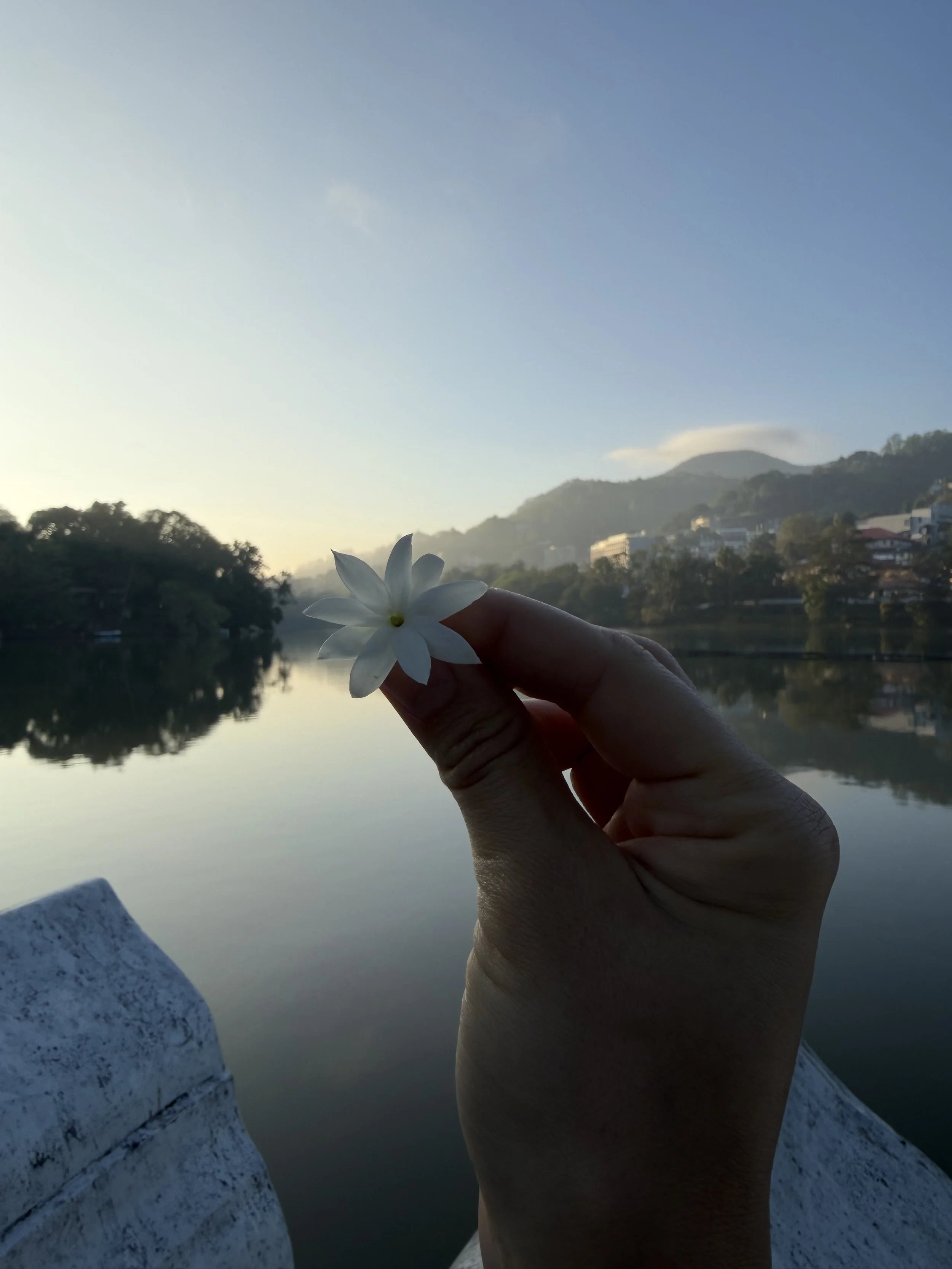
The yogic path…
The yogic path I practice and teach is not about rejecting devotion, but about internalising it. Svādhyāya — self-study. Abhyāsa — steady practice. Vairāgya — non-attachment. Through meditation, yantra, breathwork, mindful movement, and disciplined reflection, we gradually reorganise the architecture of our inner world.
When the inner temple is structured and tended to, worship changes. It becomes less desperate, less transactional, less rooted in fear. It becomes quiet devotion — an embodied alignment rather than a plea.
That morning at the Temple of the Sacred Tooth did not convert me to anything new, nor did it provide dramatic revelation. Instead, it offered clarity: outer devotion is powerful, but inner structure is transformative.
To walk the path of jivanmukti — liberated while living — is not about escaping the world or dismissing tradition. It is about being fully in the world, yet no longer governed by unconscious longing.
And sometimes, that realisation begins not in silence, but in the middle of a crowded ceremony at dawn.
A Quiet Invitation.
Experiences like this are why I do not teach yoga as posture alone.
The temple visit reminded me that ritual without integration can leave us searching, while practice rooted in inner architecture creates steadiness wherever we stand — whether in a crowded shrine at dawn or alone in the mountains under a sky full of stars.
The yogic path, as I live and teach it, is about reorganising the inner temple.
It is about learning how to sit in chaos without being consumed by it.
How to witness longing without becoming defined by it.
How to cultivate devotion that is not dependent on external structures.
In Love Life School during Yoga Teacher Training, we study philosophy not as abstract theory, but as lived inquiry. We explore sacred geometry, meditation, breathwork, Svādhyāya, and intelligent asana sequencing as tools for integration — not performance. The intention is not to create more information, but to create internal coherence.
Because once your inner temple is structured, you do not need to seek peace so desperately outside of yourself.
You begin to carry it.
If you feel drawn to deepen your practice beyond surface-level inspiration — if you sense that yoga is asking to become a way of living rather than something you attend once a week — then perhaps this is your invitation.
The journey does not begin in a temple.
It begins within.
And if you are ready to walk that path consciously, I would be honoured to guide you through it.
With love and gratitude,
Victoria.