Practice & Non-Attachment.
Sri Lanka Diaries. Part 2. Living the Sutras in Real Time.
There are moments in life when stepping away is not escape — but refinement.
During a recent period of intentional solitude and solo travel in Sri Lanka, something subtle became clear: the longing to leave what I deeply love is not rejection.
It is practice.
In the Yoga Sutras of Patanjali, we are given a foundational teaching:
Abhyāsa vairāgyābhyām tan nirodhaḥ (1.12)
The fluctuations of the mind are stilled through practice and non-attachment.
Two pillars.
Abhyāsa — steady, devoted practice sustained over time.
Vairāgya — freedom from clinging.
Later, Patañjali refines vairāgya further (1.15): mastery over desire for what is seen and unseen. Not suppression — mastery.
When students first encounter non-attachment in teacher training, it can feel abstract. Or even cold. Does it mean loving less? Caring less? Becoming detached from life?
Quite the opposite.
Non-attachment is not withdrawal from love.
It is love without possession. Engagement without dependency. Connection without fear of loss.
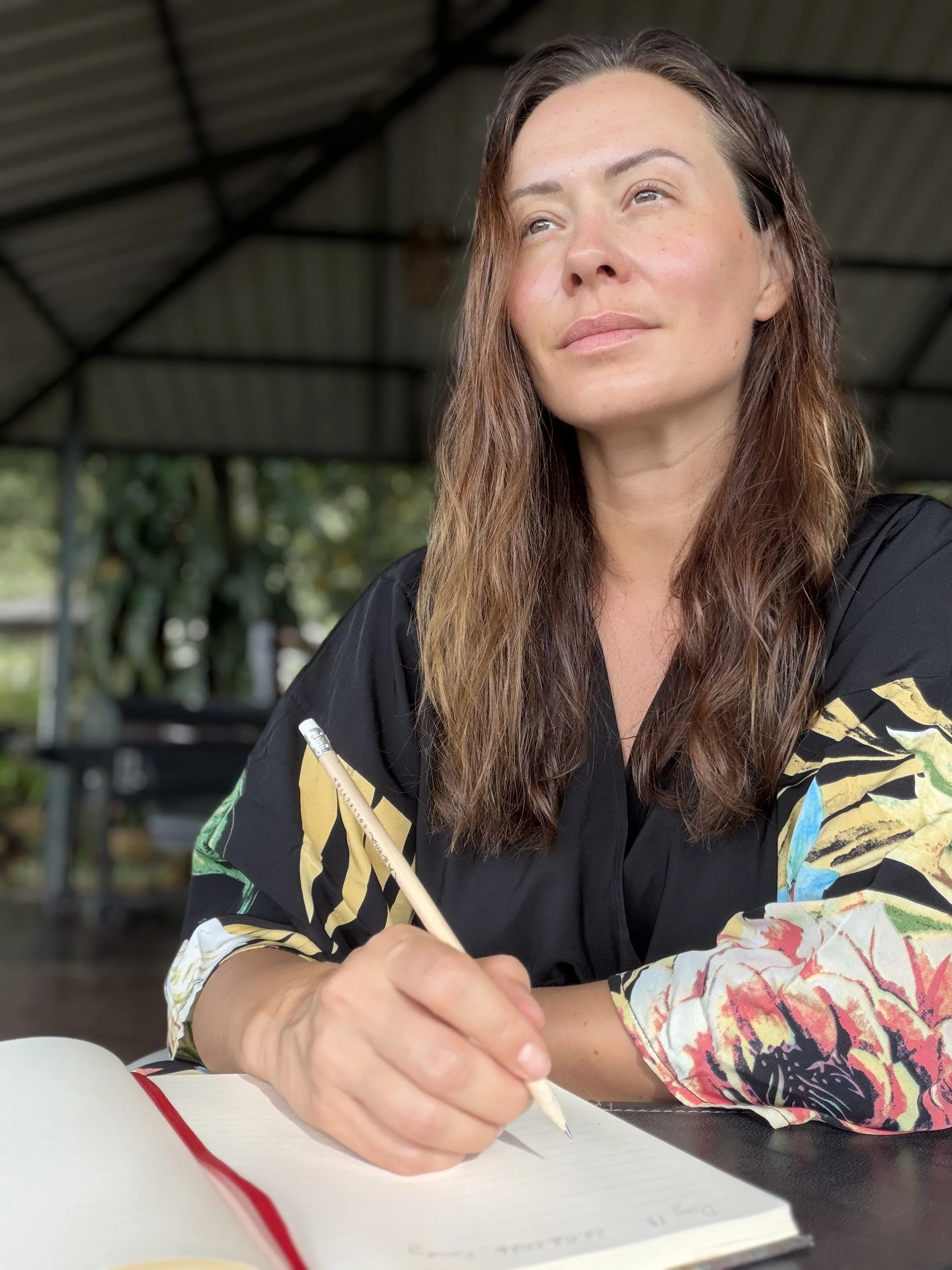
What this month revealed to me is that it is not the “comfort zone” that occasionally calls me away.
It is comfort itself.
If we never step outside what regulates us — our roles, routines, relationships, devices, identities — we rarely see where we are unconsciously attached. The nervous system binds to familiarity. The ego binds to recognition. The mind binds to narrative.
Without vairāgya, we are quietly governed by what we cling to.
Turning my phone off for six days during a retreat was not dramatic. It was observational.
What happens when external validation disappears?
What happens when digital stimulation no longer regulates the mind?
At first, restlessness. Then clarity.
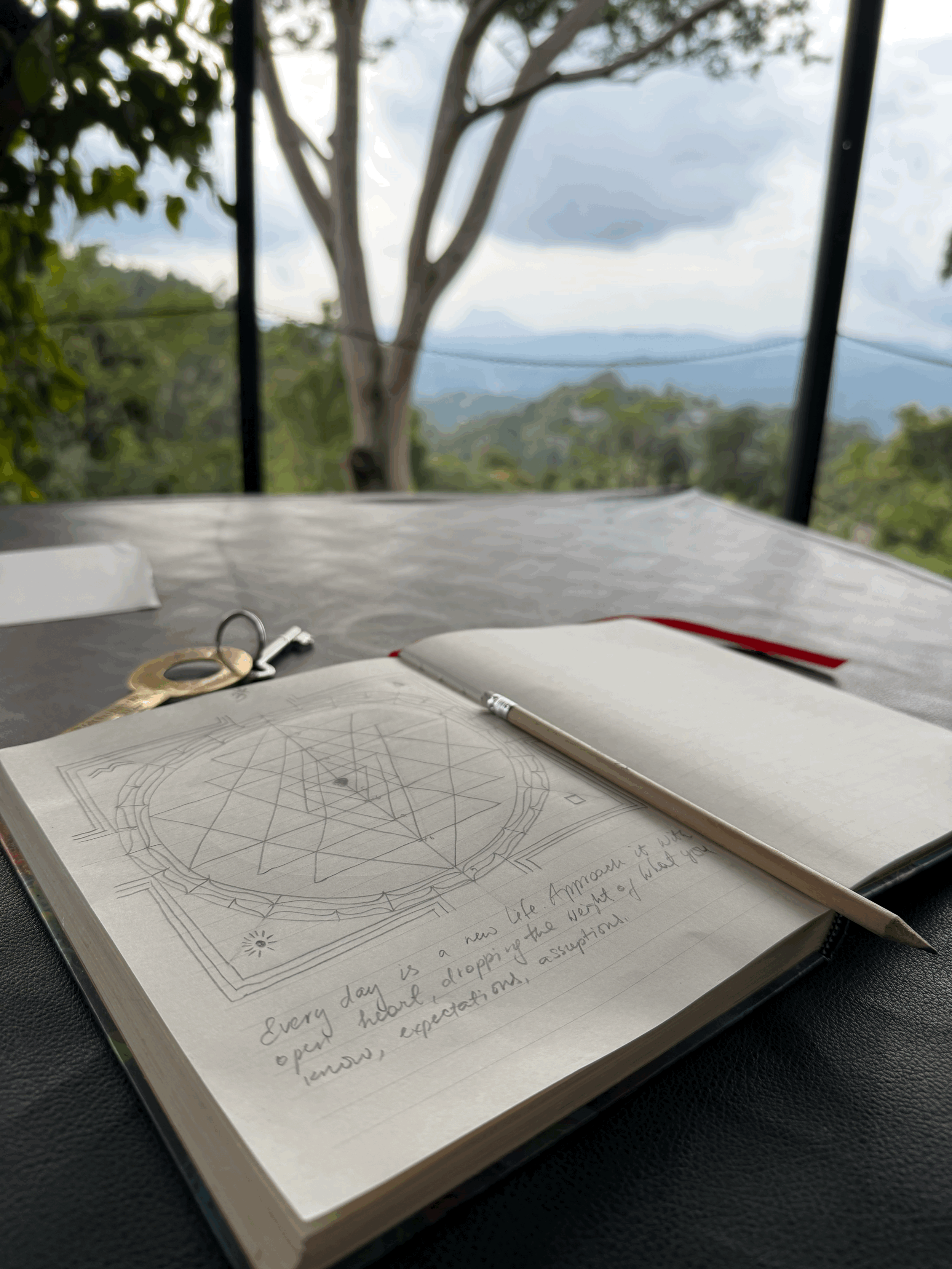
Then a spaciousness that felt almost weightless.
Alongside this, I committed to a daily practice of hand-drawing the Sri Yantra — line by line, triangle by triangle.
The Sri Yantra demands precision. It exposes perfectionism. It reveals impatience. And ultimately, it teaches surrender.
This is abhyāsa — returning daily.
And this is vairāgya — releasing the outcome.
At its centre lies the bindu — the still point where expansion and contraction dissolve into unity.
Perhaps this is what non-attachment truly offers: the ability to return to centre again and again, regardless of what we hold or release.
Yoga philosophy is not separate from life, nor it is confined to Sanskrit terminology.
It is not intellectual ornament, nor It is reserved for the mat.
It is lived in the way we love. In the way we leave. In the way we return.
Practice reorganises perception. And perception reshapes experience.
Walking the Path in Practice.
These teachings are not theoretical.
They are lived.
In our Yoga Teacher Training at Love Life School of Yoga, we study the sutras not as historical artefacts, but as frameworks for modern embodiment — nervous system regulation, relational awareness, personal sovereignty, and spiritual maturity.
The next training begins at the end of March.
If you feel called not simply to learn yoga, but to live it — to integrate philosophy into daily perception and cultivate non-attachment without losing love — this may be the right time to step forward.
Practice, sustained over time, changes the architecture of who we are.
And from there, everything else reorganises.
With love and gratitude,
Victoria.